
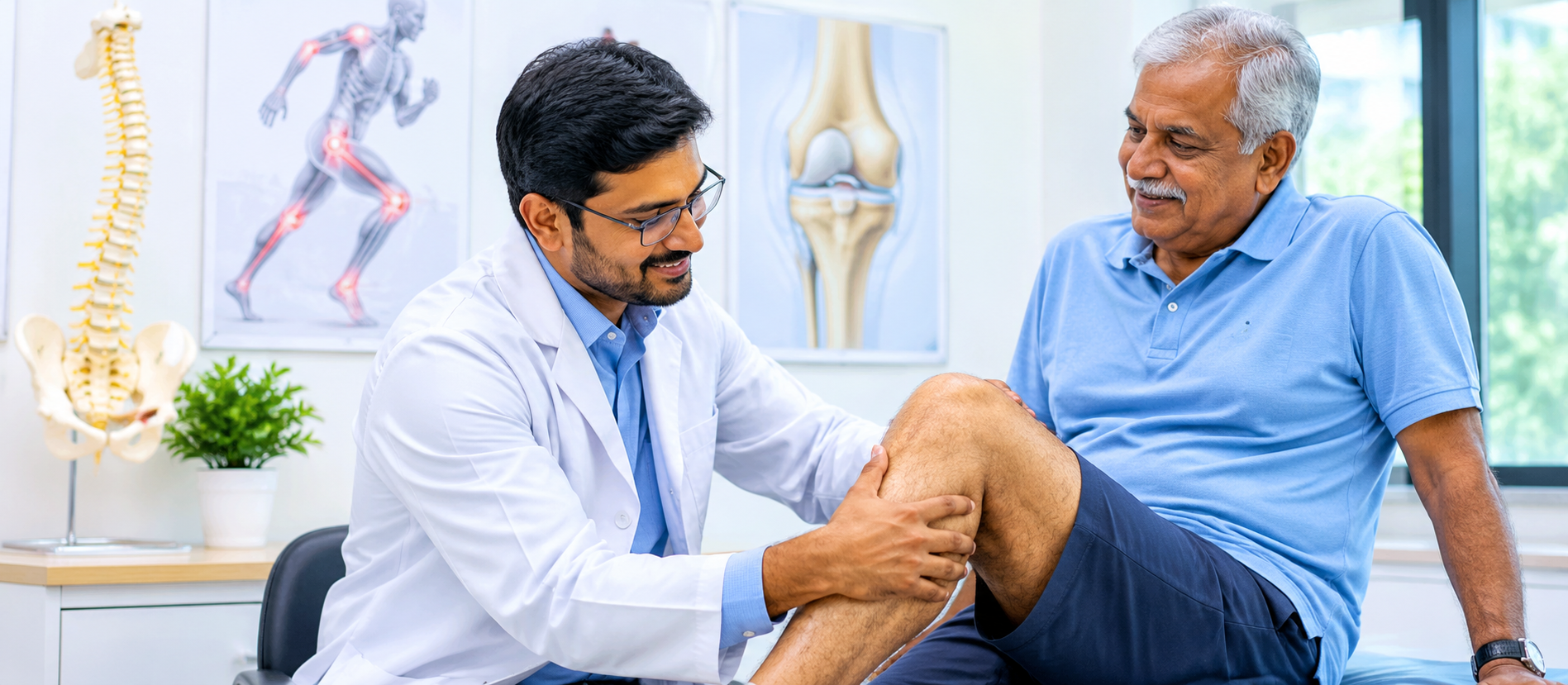
Does your knee ache after walking, does your back hurt after sitting for a while, or does shoulder discomfort return even after taking rest? Recurring pain is not always a result of everyday tiredness or temporary strain. Sometimes, it can be connected to underlying joint conditions, muscle imbalances, previous injuries, posture-related problems, or age-related changes. Understanding why discomfort keeps returning is an important step towards finding the right treatment. Consulting an experienced Ortho Doctor in Adyar can help identify possible causes through proper assessment and recommend suitable treatment based on individual symptoms and medical needs.
Old Injuries That Never Fully Recovered
An injury does not always stop affecting the body when the visible signs of damage disappear. Previous fractures, ligament tears, muscle strains, and sports injuries can sometimes leave behind weakness or restricted movement. When the affected area is exposed to similar physical demands again, discomfort may return. Understanding the injury history is therefore important when investigating recurring pain.
- Previous damage: Earlier fractures, sprains, or ligament injuries may continue influencing movement and joint function..
- Incomplete rehabilitation: Returning to normal activities before rebuilding sufficient strength and mobility can contribute to further discomfort.
- Restricted movement: Reduced flexibility following an injury may affect the way surrounding muscles and joints function.
- Repeated pressure: Placing excessive strain on a previously injured area can aggravate existing problems.
Poor Posture and Repeated Daily Movements
Not all chronic pains are caused by significant injuries. The way one carries out regular, everyday tasks during the day can be a source of discomfort sometimes. Prolonged working times, repetitive movements, a poor sitting posture, and improper lifting methods can add extra strain to specific muscles and joints. These regular cycles can become an issue over time if there is insufficient rest or physical activity.
Desk-bound routines
Sitting in the same position for extended periods can contribute to neck and lower back discomfort.
Incorrect lifting
Bending or lifting heavy objects without suitable movement techniques may strain the back.
Repetitive tasks
If similar movements are repeated throughout the working day, they can irritate muscles and tendons.
Workstation setup
Incorrect screen height, chair positioning, and desk configurations can promote poor posture.
Muscle Weakness Affecting Joint Stability
To keep joints stable when they are moving, the muscles and supporting structures around them play an important role. In some instances, when a muscle is weak, another part of the body will be forced to take up the strain, which can alter the normal movement patterns. This can lead to pain when walking, climbing stairs, lifting or doing everyday tasks. Strength and control of movement is therefore a factor to take into account when assessing orthopaedically.
At points of muscle issues:
- Less support:The muscles may not be as strong at the knees, hips and shoulders.
- Strength imbalance:Imbalances in strength between other muscles and the joint may impair the motion of the joint.
- Lack of mobility:Muscles that are tight can make it hard to move around when doing regular tasks.
- Lack of coordination: If the movement is not well coordinated, this can put extra pressure on some of the joints.
Underlying Joint Conditions Causing Persistent Pain
On some occasions, chronic pain is related to a joint disease instead of a temporary muscle strain. Diseases such as osteoarthritis, inflammatory arthritis, damage to cartilage, and instability of the joint can all affect mobility and comfort. The symptoms of these may be subtle at first, and it is easy to overlook their initial signs and think that they are just being tired. It is important to identify the underlying problem to determine what the treatment options might be.
Possible joint-related causes:
- Osteoarthritis: Damage to cartilage and other parts of the joint may cause stiffness and pain.
- Inflammatory arthritis: Some conditions lead to inflammation, which can lead to symptoms of swelling, tenderness, and long-lasting stiffness.
- Damage to cartilage: Damage or change to cartilage can affect the ability to move joints smoothly.
- Joint instability:Issues with ligaments or supporting tissues can impact balance and control of movement.
Inflammation and Its Effect on Everyday Movement
Sometimes pain and swelling are associated with inflammation in the joints, tendons, or surrounding tissues. This can be apparent when making specific movements or after exercise. Where, when, and the symptoms of an illness can be helpful in a physical evaluation. The goal of dealing with repeated discomfort isn't to treat it as typical soreness, but to comprehend the causes of inflammation.
Significant changes:
- Swelling:An affected joint can be swollen and feel more tender than the surrounding area.
- Stiffness in the morning: Joint disorders may make joints stiff first thing in the morning or after a period of inactivity.
- Tendon soreness: Overloading or repetitive movements of frequently used joints can cause discomfort in the tendons.
- Limited movement: Activities such as bending, reaching, or putting weight on the affected area may be uncomfortable.
Excessive Physical Activity Without Adequate Recovery
Physical activity is good for overall health, but doing too much activity at a high intensity without adequate recovery can be a strain on the body. This is especially important for individuals who start exercising longer, start heavy exercise, or start activities that place a strain on them without proper preparation. Understanding the difference between common post-exercise discomfort and chronic pain can help prevent overuse.
Sudden increases in workload
If you increase weights, distance, or workout intensity too quickly, muscles and joints become overloaded.
Not resting enough
Doing things that are stressful, but not getting enough rest, can also lead to ongoing pain.
Improper techniques
Incorrect exercise movements may place unnecessary pressure on specific body parts.
Repeated impact
Activities that require repeated jumping, running, and/or sudden directional changes can exacerbate existing injuries.
Age-Related Changes in Bones and Joints
The body's musculoskeletal system undergoes gradual changes with age. Bone density, muscle mass, the condition of cartilage, and flexibility of the joints may change over time, impacting the ease and comfort with which a person is able to carry out their daily activities. But remember that there is not only one reason for recurrent pain, and that is simply ageing. When assessing joint issues, it is also crucial to take into account an individual's entire health profile, physical activity, and medical history.
Some of the common age-related changes are:
- Cartilage deterioration: Over time, changes may occur in the cartilage of the joints, which can lead to stiffness and discomfort.
- Reduced bone density: Lower bone density can increase the risk of fractures.
- Muscle changes:The physical strength and stability might be affected by muscle changes.
- Decreased flexibility: Muscles and other tissues can become stiff and make some movements more difficult.
Why Identifying the Actual Cause Matters Before Treatment
Persistent pain may have various causes, and a band-aid solution doesn't solve the problem. A thorough orthopaedic evaluation can be used to identify symptoms, the potential cause of symptoms, and whether additional investigations are needed. Treatment needs to be based on diagnosis and not the assumption that the pain is coming from a specific location.
The assessment process might include:
- Symptom history: This is about when the pain has appeared, how often, and what activities make the pain worse.
- Medical history:Past injuries, surgeries, conditions, and previous treatments.
- Physical exam: When clinically appropriate, use of X-rays, MRI scans, or other tests.
- Personalised treatment: Considering appropriate treatment options, including medication, physiotherapy, activity modification, and/or recommended treatment.
Don't Let Recurring Pain Become Your New Normal
Pain that repeatedly interrupts your daily routine deserves attention rather than becoming something you simply learn to tolerate. Whether it starts after physical activity, appears during everyday movements, or returns following an old injury, understanding its underlying cause is an important part of finding the right care. An appropriate orthopaedic evaluation can help identify contributing conditions and determine suitable treatment options based on individual needs. Consulting an experienced Ortho Doctor in Adyar can help you take a more informed approach towards managing recurring discomfort, improving mobility, and protecting your long-term bone and joint health.
Book an appointment to discuss your condition and treatment options.
Need expert orthopaedic care?
Talk to Dr. Vinoth's Advanced Ortho Clinic about your knee or shoulder condition.