
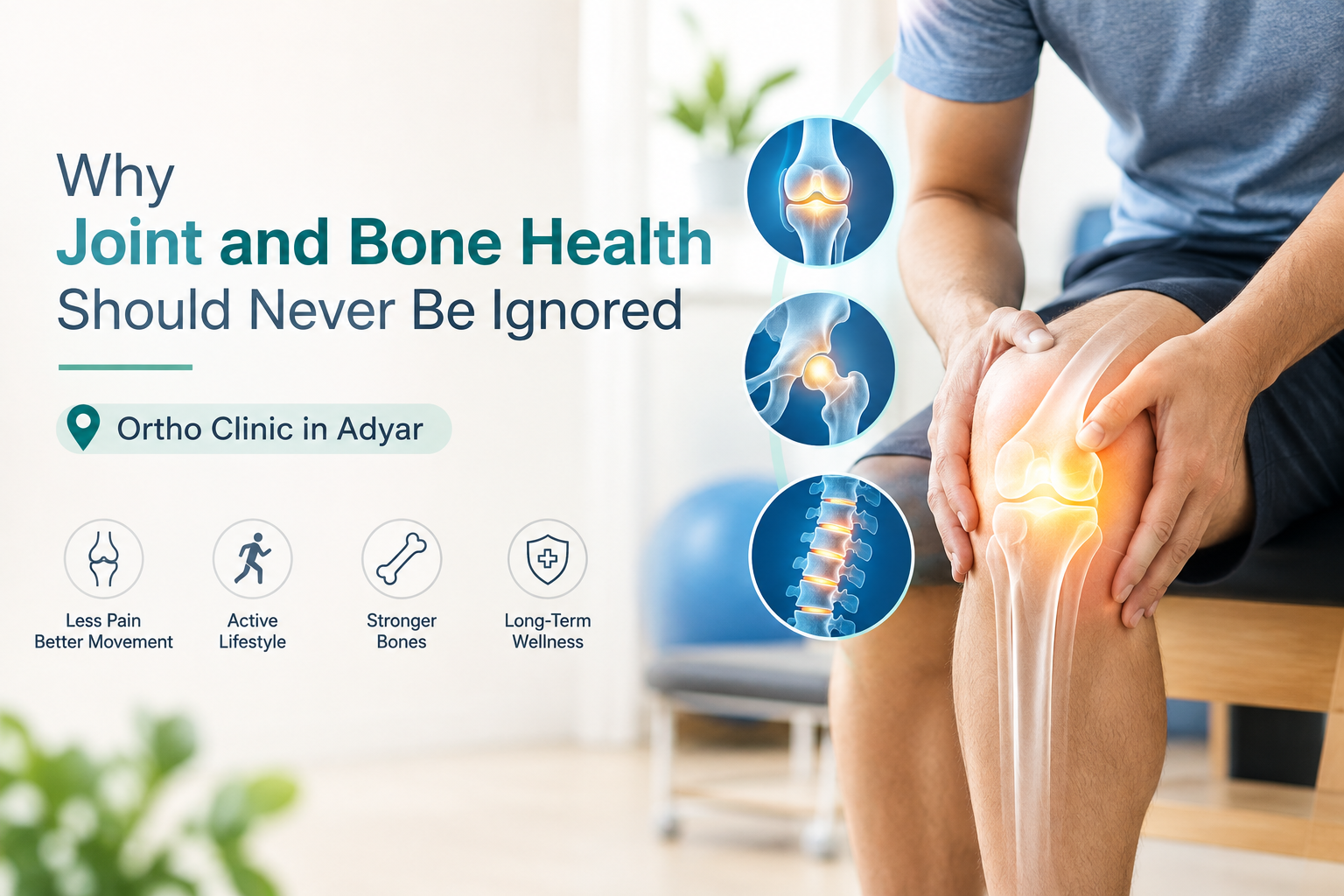
Your bones and joints rarely complain all at once. Sometimes the first signs are small changes that seem easy to dismiss, such as feeling stiff after sitting for a while, finding certain movements less comfortable, or noticing that an old injury no longer feels completely normal. Because movement is part of almost everything we do, paying attention to these changes can be important before they begin interfering with work, exercise, sleep, or simple daily activities. Good musculoskeletal care is not only about treating pain after it appears; it is also about understanding changes in movement, protecting mobility, and seeking appropriate advice when something does not feel right. In this blog, we will explore why joint and bone health should never be ignored and how awareness of everyday changes can support better long-term mobility. Consulting a qualified Ortho Clinic in Adyar can also help when persistent or unusual bone and joint concerns need professional evaluation.
What Healthy Movement Looks Like
Good movement is not working out every exercise to perfection. It is the ability to perform basic activities like walking, climbing up and down stairs, bending, standing, reaching, and rising from a chair without undue effort. People are not likely to pay much mind to the joints and bones that make it easy to move when they feel comfortable and natural doing it. Focusing on your body's natural movement can help you see important differences better.
Some examples of healthy movement include:
- Comfortable walking: Walking should generally feel natural without unexpected difficulty or persistent discomfort.
- Normal daily flexibility: Easy mobility occurs without the movement being regularly felt as being limited.
- Stable coordination: The body should be able to maintain control during routine movements.
- Functional strength: Standard daily activities should not be difficult because of unusual weakness.
The Hidden Impact of Joint Stiffness
It can sometimes be a minor nuisance, as it may occur after sitting or resting for a while. But the stiffness may, over time, impact an individual's ability to function and participate in daily tasks. When the joints don't feel as flexible as normal, individuals may start altering their gait, or how they walk, bend, or use a specific joint or body part without knowing it.
- Morning movement: There could be some difficulty in being able to move around comfortably in the morning.
- Daily flexibility: With limited mobility, routine actions may become more cumbersome.
- Work activities:Sitting, standing, bending, or walking may become more difficult during the day.
- Movement patterns: Individuals may alter the way they move without realizing it in order to avoid discomfort.
How Everyday Habits Affect Bone Strength
Bone health is not only affected by events following injury. Healthy bones over the long term can be supported by daily activities, exercise, diet, and lifestyle. Many of the good habits of building up musculoskeletal health can be developed early and help people to be more aware of long-term mobilit
- Regular activity:Physical activity is appropriate and can aid overall bone and muscle function.
- Balanced nutrition:A healthy diet will help provide important nutrients for general bone health.
- Suitable body weight:To ensure normal movement and joint function, maintaining appropriate body weight is important
- Good routines: Regular sleep, activity, and general health care can help with overall physical health.
Why Mobility Changes Should Be Noticed Early
The mobility change may start with a simple issue, like it taking longer to get up a flight of stairs or to avoid a certain movement. When these changes do not halt normal activities they may be easy to ignore. It may be helpful for the person to be aware of and monitor the changes that are occurring to realize that a problem is becoming more persistent than it would seem.
- Reduced range of motion: A joint may not move as freely as it normally does.
- Slower movement:A Activities may become increasingly difficult/slow.
- Refraining from activities: Individuals may refrain from making certain movements if they are uncomfortable.
- Ongoing changes:If there are differences from your normal pattern that are repeated, they could be worthy of professional focus.
The Connection Between Balance and Joint Health
Balance relies on coordination of the muscles, joints, nerves, vision and other body parts. Sometimes activities may feel less stable due to joint or movement problems. Monitoring the changes in balance can therefore be helpful, particularly with new, repeated, or additional difficulties in movement.
There are several ways in which balance awareness may manifest:
- Walking stability:If walking is not as steady as normal, be aware of it.
- Standing control: Issues with balance while standing should be considered.
- Changing direction: Should be easy to change direction; do not have to change direction frequently and suddenly.
- Movement confidence: Avoiding activities because you no longer feel stable can be an important change to notice.
How Joint Health Influences Independence
Safety and comfort in movement help to enable independence in day-to-day activities. Mobility is essential for doing many simple things, like dressing, cooking, shopping, travelling, bathing, or going up and down stairs. If joint issues get in the way of these activities, individuals can start delegating more tasks to others than they are able to do on their own
Mobility supports independence through:
- Daily tasks: Activities of daily living are easier to perform when one is healthy and moving.
- Work activities: Good mobility can support commuting, standing, sitting, walking, and workplace tasks.
- Social participation: Movement can be easier and more comfortable, and thus easier to attend events and spend time outside the home.
- Independent mobility:The ability to move on their own can help with confidence in everyday life.
- Reduced activity: People may participate less in activities they normally enjoy.
- Daily difficulty: Basic tasks can become more challenging when movement is restricted.
- Compensating movements:An individual may use other joints or movements to perform a task.
- Reduced mobility confidence: Discomfort or difficulty moving may result in additional avoidance.
- Initial assessment: A proper understanding of the nature of an injury can help to determine next steps.
- Rest and protection:In some cases, there is a period of sub-optimal activity required to allow the damaged area to heal.
- Rehabilitation: Guided exercises can be used to restore movement, strength and function if appropriate.
- Gradual return: Activities may have to be gradually brought back to normal, rather than all at once.
What Happens When Movement Becomes Limited
A restriction on mobility can have more than one impact on your life. A person might start to avoid activities, change their posture, or use other parts of their body differently in order to compensate. As these changes occur over time, everyday activities can become more challenging, and physical activity may be decreased.
Lack of movement may cause:
Why Recovery Matters After an Injury
“Small changes in mobility are worth noticing because movement is part of everyday independence.”
An injury doesn't always have to be "business as usual" with no further care. Treatment will vary depending on the injury and its severity, and can include rest, rehabilitation, a gradual return to activity, or professional follow-up. The return to demanding activities should be based on the type of injury and may not be suitable if the activity is returned to too early.
Recovery can involve:
Keeping Movement Part of Everyday Life
Good bone and joint health is closely connected to the simple movements that make everyday life possible. Walking comfortably, getting up from a chair, climbing stairs, working, exercising, and carrying out household activities all depend on a healthy musculoskeletal system. While not every ache or stiffness indicates a serious problem, changes that persist or begin affecting normal routines deserve attention rather than being continually pushed aside. Understanding your usual movement, noticing changes early, maintaining sensible daily habits, and seeking professional advice when needed can all support better long-term mobility. For anyone looking for guidance from an experienced Ortho Clinic in Adyar, a proper evaluation can help identify the nature of a bone or joint concern and determine an appropriate approach to care.
Book an appointment to discuss your condition and treatment options.
Need expert orthopaedic care?
Talk to Dr. Vinoth's Advanced Ortho Clinic about your knee or shoulder condition.