
Robotic Knee Replacement Surgery
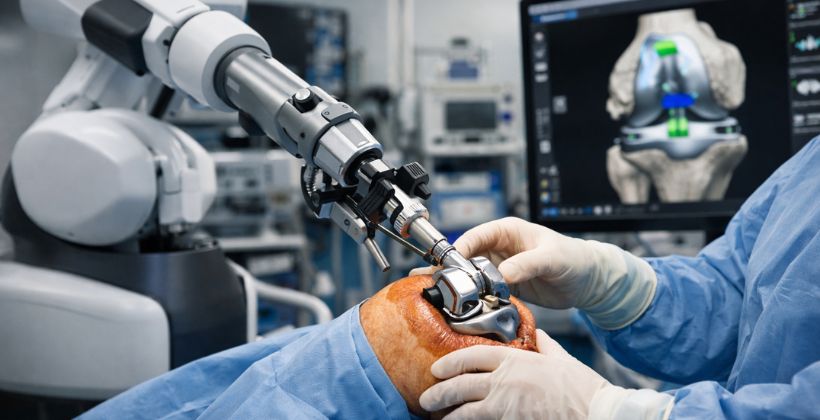
When knee or hip pain starts affecting walking, climbing stairs, or even routine daily activities, joint replacement may become a long-term solution. Robotic knee replacement surgery combines the experience of an orthopaedic surgeon with advanced robotic assistance to improve the planning and execution of joint replacement procedures. We are the trusted Robotic Knee Replacement Surgery in Adyar. Compared to conventional surgery, where implant positioning is largely based on manual measurements and standard surgical guides, our robotic-assisted surgery uses preoperative imaging, computer-based 3D planning, and real-time surgical guidance to help the surgeon achieve a more precise implant position and alignment.
What Is Robotic Knee Replacement Surgery?
Robotic knee replacement surgery is a technology-assisted approach used primarily for total knee replacement and, in selected patients, partial or unicompartmental knee replacement. The procedure begins with a detailed assessment of the patient's knee, including the extent of cartilage loss, bone changes, limb alignment, deformity, and ligament condition. This model allows the surgeon to plan the procedure according to the patient's individual anatomy.
Key Benefits of Robotic Knee Replacement
Every joint needs a different plan
Robotic assistance is not automatically required for every patient. The treatment approach is selected after examining the joint, reviewing imaging and understanding the patient's goals.
Depending on the condition, treatment may include physiotherapy, medication, injections, joint preservation procedures, partial replacement or total joint replacement.
How Robotic Knee Replacement Works
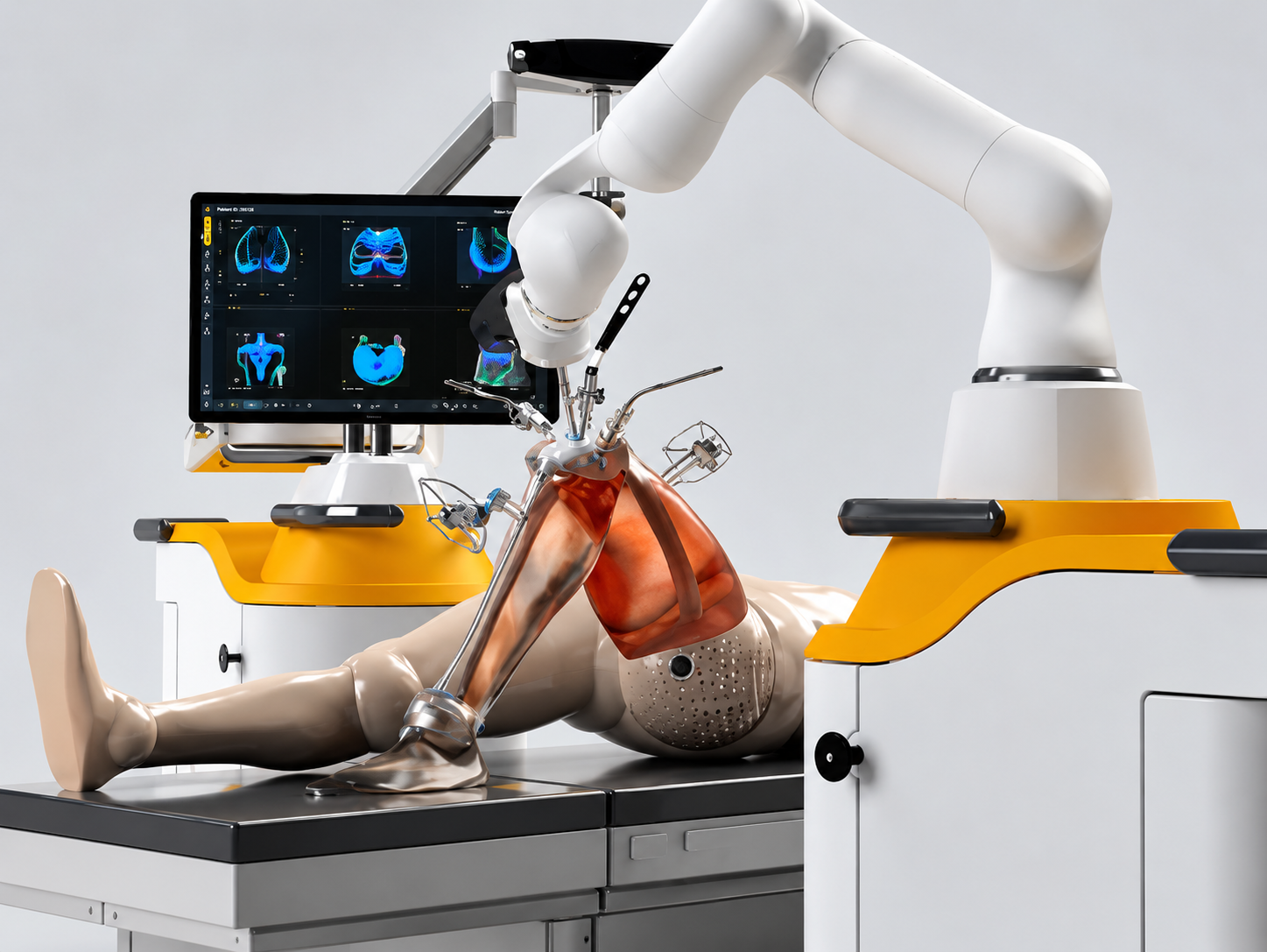
Robotic knee replacement surgery is a combination of 3D surgical planning, real-time anatomical tracking and robot assistance, which allows the surgeon to perform the surgery with more control and precision.
Preoperative Assessment
The surgeon checks the knee for cartilage damage, bone abnormalities, ligament laxity or knee alignment. Imaging and clinical examination will determine the best approach to surgery.
3D Surgical Planning
A 3-D model of the knee is made using patient-specific imaging. Based on the patient's specific anatomy, the surgeon determines the cuts that will have to be made in the bone, as well as the size of the implants, their positioning, and the alignment.
Real-Time Knee Mapping
In surgery, the tracking technology is used to determine the position and movement of the femur and tibia. This enables the robotic system to have static anatomical information all the way throughout the process.
Robotic Guided Bone Preparation
The surgeon will be using the robotic tool to carry out the planned precise preparation of the bones. The system consists of measurement and guidance to ensure the planned resection and alignment parameters are kept in real time.
Alignment and Implant Positioning
The surgeon checks knee alignment, the stability and balance of the ligaments and the stability of the knee before deciding where the implant will go. A customised surgical plan is then followed, with the positioning of the femoral and tibial components.
Rehabilitation
Physiotherapy after surgery is aimed at restoring knee movement, muscle strength, walking and balance. Follow-ups are important to monitor recovery and the knee as a whole.
Our Approach
Knee Assessment
Detailed assessment of knee trauma, alignment, mobility and ligament stability.
3D Surgical Planning
Accurate 3D planning for patient-specific bone preparation and accurate implant positioning.
Robotic-Assisted Surgery
Bone cutting is controlled, and the precision of surgery is supported via real-time robotic guidance.
Alignment & Implant Placement
A surgeon inspects knee balance, then adjusts the alignment of the implant.
Rehabilitation & Follow-Up
A program of structured physiotherapy allows function to be regained; strength and walking can be restored.
Recovery is a process, not just a procedure.
Following joint replacement, rehabilitation plays an important role in restoring strength, mobility and confidence.
- Guided early mobilisation
- Structured physiotherapy
- Progressive strengthening
- Follow-up assessment
Common questions about robotic joint replacement
Move Forward with Confident Knee Care
Don’t let persistent knee pain limit your everyday life. Consult an experienced orthopaedic specialist to understand whether Robotic Knee Replacement Surgery in Adyar is right for you and take the next step towards improved mobility and quality of life.